
Fermented Chilli Hot Sauce
Equipment
- Large Glass Jar (minimum 3 litres)
- Weighing Scale
- Blender (with jug)
- Sieve
- Glass Bottles (sterilised)
Ingredients
To Ferment The Chillies
- 500 grams Red Chillies
- 50 grams Sea Salt
- 1.2 litres Water (filtered)
To Make The Hot Sauce
- 100 ml Vegetable Oil
- 8 cloves Garlic (sliced thinly)
- 1 sprig Fresh Rosemary
- 150 ml Cider Vinegar
- 50 ml Brine Liquid (from chilli fermenting jar)
- 1/2 tsp Xanthan Gum (optional)
Instructions
To Brine The Chillies
- Wash the chillies and slice off the green stems. Then slice through the chilli's length to make two halves.Depending on how hot you like your hot sauce, and also depending on how intense the chilli flesh actually is, you can decide to remove or keep the seeds.

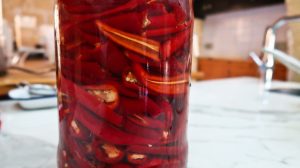
- Pack the chillies in a big jar which can store all the chillies. Dilute the sea salt with the filtered water and poor into the jar.
- Place a plastic bag filled with water in the jar to press down the chillies to be submerged in the salted water.It is important that chillies remain submerged through the process to avoid undesirable mold on the top.
- Seal the jar with a lid and place in a dark place at room temperature for a minimum of 1 to maximum 2 weeks.
To Make The Hot Sauce
- Take the chilli brine jar out of storage and open. Do not be worried if the brine has become a bit cloudy and there is a white film layer on the surface. As long as there are no fuzzy black threads (i.e. mold), you are good to go!
- Empty the contents of the jar through a sieve and reserve some of the brine liquid.
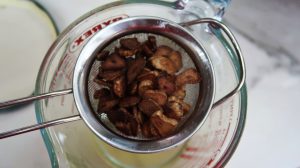
- While the fermented chillies drain, heat up the oil in a skillet and fry the garlic until dark. Careful to not burn the garlic because it can become undesirably bitter.
- Drain the toasted garlic and reserve the garlic-infused oil.
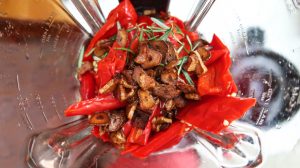
- Fill the jug of a blender with the fermented chillies and add the toasted garlic, rosemary, 50ml of the reserved brine and cider vinegar. Blend until smooth.
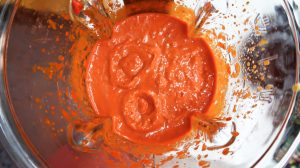
- With the blender still running add some of the garlic-infused oil. Not more than half of it. And once emulsified add the optional xanthan gum and continue blending until combined.
- Taste and decide if you need to season with a bit more salt and if you desire a bit more acidity with an extra dash of cider vinegar.
- Pass through a fine sieve and bottle the hot sauce in sterilised bottles.It is up to you if you would like to reserve the chilli pulp and seeds left in the sieve. All you need to do is store in a sterilised jar and top it with some oil. Could be handy if you would like to add a punch of heat to a sauce, minced meat, or vegetables.
Notes
You might be wondering what is xanthan gum. It is a common food additive which is used as a thickening agent and stabilizer. Normally you can find xanthan gum at the supermarket near other powder-based agents such as bicarbonate of soda, baking powder, or cream of tartare.
In the case of this recipe, the xanthan gum helps add a little bit of density to the hot sauce so it is not so runny. It also helps keep the emulsification of the oils and water from separating during storage.